About us
Fotophase is a 501(c)(3) nonprofit exploring the potential of photography as a neuroarts practice to support well-being, self-discovery, and human connection.
Our Core Values
Safety
We create welcoming, judgment-free spaces where all individuals — regardless of background, experience, or skill level — feel safe to explore, express, and grow.
Human-Centered
We honor dignity, agency, and lived experience. Our work celebrates human connection and creative expression.
Collaboration
We partner with healing professionals, educators, artists, and institutions to amplify arts-based healing in our communities.
Research
Programs are informed by neuroaesthetics, trauma-informed care, and evidence-based practices in creative wellness and healing.
Accessibility
We strive to make programs accessible through free community labs, sliding-scale fees, and partnerships with underserved communities.
Integrity
We operate with transparency, accountability, and a steadfast commitment to our mission and communities.
Team
Kiran Karnani
President
A marketing leader, executive coach, and longtime advocate for photographers, Kiran previously served as Vice President of Marketing for Leica Camera USA, where she pioneered the Leica Women Foto Project to expand visibility and opportunities for women in photography.
Through her consultancy, ApertureWorks, Kiran advises creative organizations and guides individuals seeking greater clarity, purpose, and alignment. Her work brings together her experience in photography, brand stewardship, and leadership coaching with a deeply held belief that making photographs can shift how we see ourselves, relate to the world, and discover our potential for wholeness.
James Rice
Vice-President
James Rice is a Midwest American photographer whose roots in photography go back
to the days of black and white film in the late 1950s. His mother introduced him to
photography when he was 6 years old. When he was only 9 years old, a mentally ill
man with a shotgun invaded the Rice home, shot his father, wounding him critically, then
shot his mother in the head, killing her instantly. Because of the trauma of the shooting,
James did not seriously photograph for the next 40 years. At age 49, after a 28-year
marriage fell apart, a mental health counselor suggested that James should risk
seriously engaging in photography again. That suggestion turned out to be lifesaving.
Over the last two decades, James’s black and white photography began to rewire his
brain, allowing him to remember life events that had been lost for over 40 years, while
also mitigating the effects of the PTSD that had impacted his life for four decades.
James documented his trauma and recovery in a photo essay titled “Shooting”, which
led to a symposium at the International Center of Photography in New York City and
ultimately the formation of the nonprofit organization Fotophase. James is a Co-Founder of Fotophase.
Dr. Gene Beyt
Chair of the Scientific Advisory Board
Senior physician and professor at Tulane University, teaching human-centered design and patient-centered innovation. He is a student of art-based discovery and healing after trauma, putting human needs and wellbeing at the center of all that we do. Gene has been a fine art photographer for 50 years. His current work makes use of the camera as an instrument of discovery. As a traveler in a strange land, he searches for understanding and enlightenment. Gene is a Co-Founder of Fotophase.
Dr. Ahmad Beyh
Scientific Advisor
Ahmad Beyh is a neuroscientist and photographer whose work sits at the intersection of the two fields. Long exposure photography, and the strangeness of watching motion become visible on a camera sensor, is what first made him ask how the brain builds a moving picture of the world. His research spans conscious visual perception, the neural basis of the experience of beauty, and how the brain’s wiring shapes perception and mental health. He shoots landscapes and cityscapes, still chasing motion that most people walk past.
Dr. Daniel Potts
Scientific Advisor
Daniel C. Potts, MD, FAAN (“Danny”) is an award-winning advocate for the expressive arts and creativity as powerful tools for promoting wellbeing, resilience, and human connection.
Danny’s life was profoundly transformed through art when his father, Lester, discovered a remarkable talent for painting during the mid-stages of Alzheimer’s disease. Lester’s artwork has since gained international recognition. Witnessing this creative awakening amidst disability—and seeing its ability to foster hope, healing, personal identity, and meaningful relationships—inspired Danny to dedicate himself to advocacy for individuals living with disease and disability, as well as their care partners.
His contributions have earned national recognition. The American Academy of Neurology honored his advocacy efforts, and Maria Shriver named him an “Architect of Change” for his innovative work supporting people affected by dementia.
Inspired by his father’s artistic journey, Danny also embraced poetry and photography, using both as tools to promote mindfulness, resilience, and human flourishing. He is the founder of Cognitive Dynamics, a nonprofit organization that brings expressive arts and life-story preservation programs to individuals living with dementia.
Cognitive Dynamics’ flagship initiative, Bringing Art to Life, creates meaningful intergenerational connections between students and people living with dementia. Research has shown that the program helps build empathy, reduce stigma and depression, and increase interest in careers focused on elder care.
Danny and his wife, Ellen, have two adult daughters and reside in Tuscaloosa, Alabama.
Torrance York
Advisor
Diagnosed with Parkinson’s disease in 2015, York uses her creative process to integrate this life-altering information into her sense of self. Through her series and book Semaphore (Kehrer Verlag, 2022), she explores the evolving relationship between the progressive illness’s specific consequences and her identity, between her inner and outer worlds, using photography as both a means of inquiry and connection. Her newest body of work, Interstices, extends this investigation, focusing on the less visible, non-motor dimensions of Parkinson’s and the intersecting realities of aging.
York’s work has been featured in leading photography publications and Parkinson’s-focused media, including the Michael J. Fox Foundation Updates and LensCulture’s recent “Spotlight: Women Shaping Photography Today.” She has presented her work at the 2023 World Parkinson Congress in Barcelona, to Parkinson’s support groups, and at the Neurology Grand Rounds at the University of Virginia, UCLA, and Wake Forest University, speaking about the intersection of art, illness, and lived experience. Most recently, she was a guest speaker for the graduate program at the Spirituality Mind Body Institute at Teachers College, Columbia University.
Fascinated by the relationship between the neural circuits involved in creativity and those affected by Parkinson’s disease, York continues to explore photography as a way of making visible what is often unseen. Her work is held in the collections of the Addison Gallery of American Art, the Danforth Art Museum, and the Fine Art Collection at Montefiore Einstein, New York. Her work is represented by Rick Wester Fine Art, and she is a member of the Silvermine Guild of Artists.
Jaime Fernandez
Advisor
Gajan Balan
Advisor
Drawing on an honours degree in kinesiology and health science, a decade in sales and marketing, and countless trips around the globe, he’s deeply committed to authentic storytelling and the fulfilment it brings. Today, he divides his time between crafting meaningful visuals for commercial clients and highlighting humanistic stories that draw deep inspiration from his culture and heritage.
Ultimately, his purpose is simple: travel the world, create compelling stories, and inspire the next generation of creatives.
Mathieu Bitton
Advisor
Mathieu’s successful exhibitions have included Travelogue (Los Angeles, 2013), Ascension (Vienna, 2015 and Sofia, 2016), Darker Than Blue (Los Angeles, 2016; Boston; Miami, 2017; Frankfurt, Wetzlar, 2018), and most recently Paris Blues (Los Angeles, New York; 2024, Miami 2025; Chicago 2026), the inspiration and companion to his best-selling book (#1 on Amazon). Mathieu has been honored to serve as an ambassador for Leica Cameras and he has partnered with and participated in several of their ad campaigns and events.
Among Mathieu’s numerous achievements are five Grammy® nominations — including three wins (as producer on Dave Chappelle’s comedy albums “The Closer,” “What’s In A Name?” and “The Dreamer”) — being awarded the medal of Knight in the Order of Arts and Letters, bestowed by the French Government, and receiving the Seal of the President of the United States from the White House for Paris Blues in 2024.
David Butow
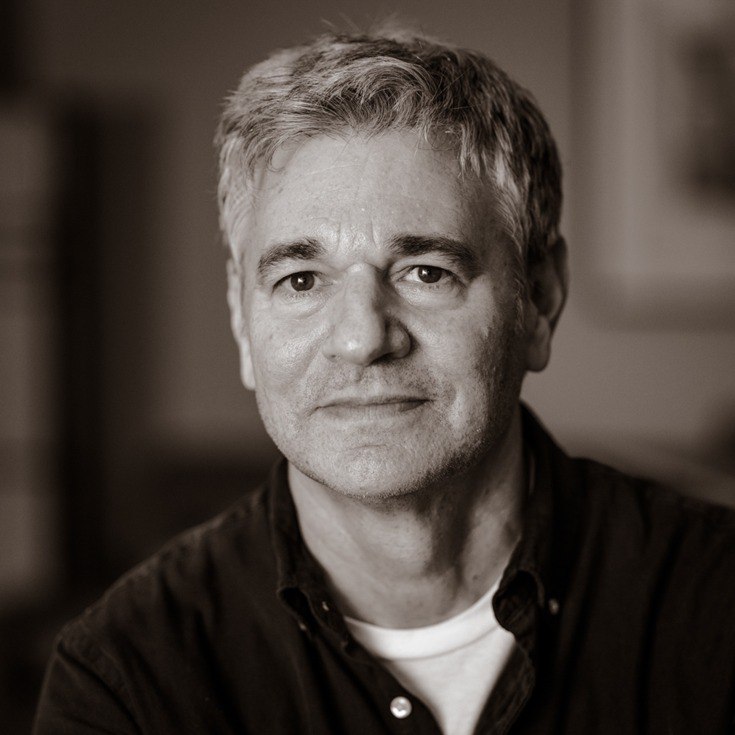
David Butow is an acclaimed American photojournalist whose work spans decades and continents, known particularly for his unflinching documentation of social and political issues around the world. After beginning his career as a staff photographer for various newspapers, Butow transitioned to freelance work that has appeared in major publications including National Geographic, TIME, and The New York Times Magazine. His notable projects include coverage of the 2003 Iraq invasion, the Asian tsunami of 2004-05, and the 2019 democracy protests in Hong Kong. His 2021 book "BRINK" chronicled American politics during the Trump presidency. Butow's distinctive visual style combines journalistic integrity with an artistic sensibility that captures both the gravity and humanity of his subjects, earning him recognition through multiple awards and exhibitions of his work in galleries and museums internationally.